29 November 2025
Slipped Disc Stages: Understanding the 4 Stages of Disc Herniation
Learn the four stages of a slipped disc—disc bulge, protrusion, extrusion, and sequestration—symptoms, treatment options, and when to consult Dr. Abhijit Kale, Mumbai’s spine specialist.
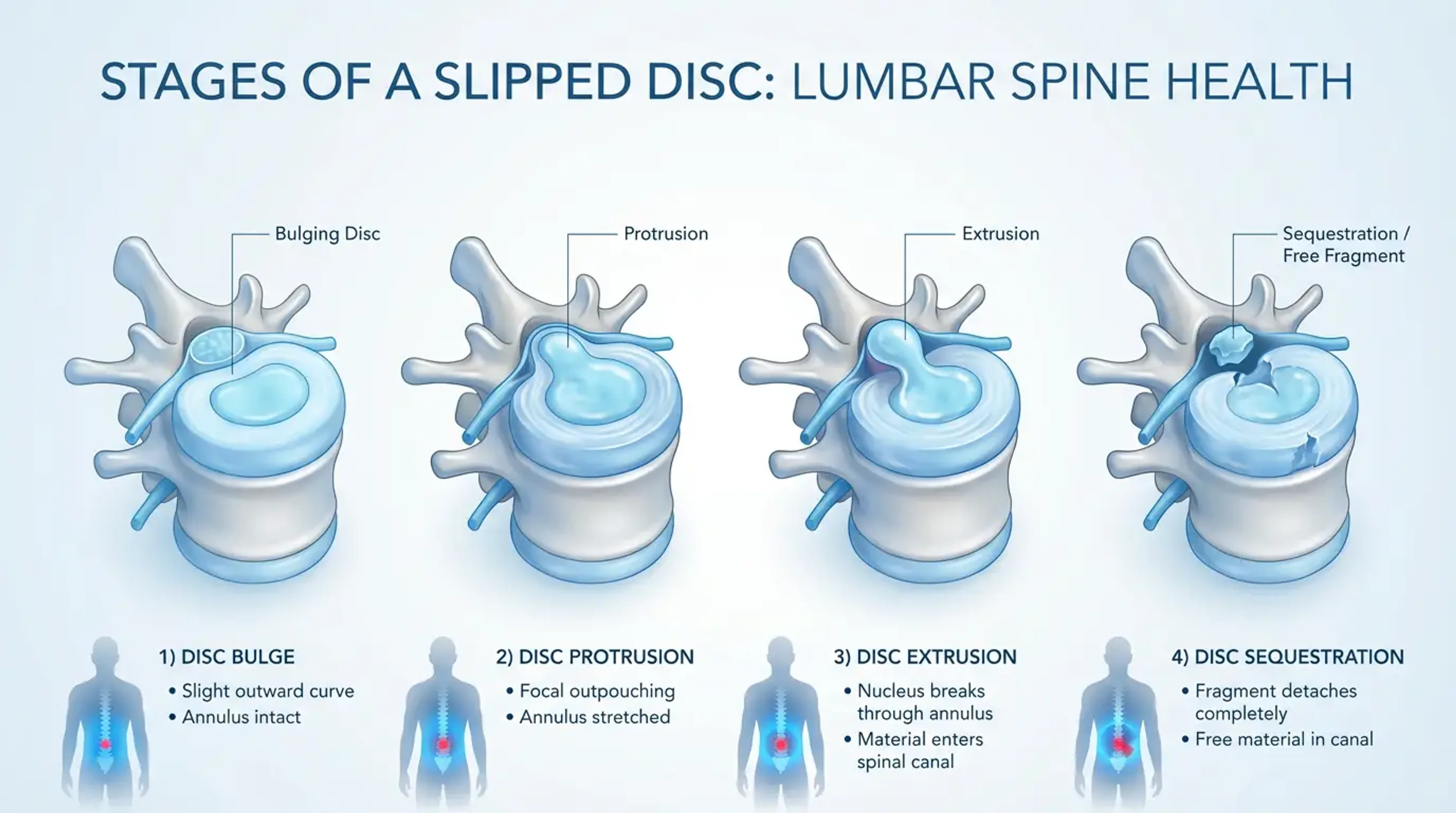
A slipped disc (disc herniation) is one of the most common causes of lower back pain, neck pain, and sciatica.
But most patients don’t know that a slipped disc progresses through four distinct stages—and each stage affects symptoms, treatment, and recovery.
Understanding these stages helps you identify the right time to seek medical help and prevent long-term nerve damage.
What Is a Slipped Disc?
Between each spinal bone (vertebra), you have a soft cushion-like structure called an intervertebral disc.
When this disc weakens or gets injured, its soft inner material can push outward—this is what people call a “slipped disc.”
A slipped disc doesn’t always mean surgery.
But the stage of herniation determines how severe the problem is.
The 4 Stages of a Slipped Disc
1. Disc Bulge (Early Degeneration)
This is the mildest stage.
The disc starts to lose hydration, becoming stiff and less flexible.
The outer wall bulges slightly, but no major tear has occurred.
Symptoms:
- Mild back/neck discomfort
- Stiffness in the morning
- Pain after long sitting or bending
Treatment:
- Physiotherapy
- Anti-inflammatory medication
- Posture correction
- Activity modification
👉 Usually fully treatable without surgery.
2. Disc Protrusion (Annular Tear Begins)
The inner gel (nucleus pulposus) starts pushing outward, causing a more visible bulge.
The outer ring begins to tear, but the gel has not leaked out.
Symptoms:
- Localized back pain
- Pain radiating to buttock or shoulder
- Occasional tingling or numbness
Treatment:
- Physiotherapy
- Heat/ice therapy
- Lifestyle modification
- Targeted spinal exercises
👉 Most patients recover with conservative treatment.
3. Disc Extrusion (Advanced Herniation)
The inner gel breaks through the outer ring and pushes into the spinal canal.
This stage can compress spinal nerves, causing stronger symptoms.
Symptoms:
- Sciatica (leg pain)
- Sharp/burning pain radiating to arms or legs
- Frequent numbness or tingling
- Muscle weakness
Treatment:
- Medications
- Physiotherapy
- Epidural/steroid injections
- Minimally invasive spine surgery (only if severe)
👉 Early treatment prevents permanent nerve damage.
4. Disc Sequestration (Most Severe Stage)
The disc material breaks off and separates entirely, floating within the spinal canal.
This is the most severe form of herniation and often requires urgent medical attention.
Symptoms:
- Severe radiating pain
- Loss of strength
- Inability to stand or walk comfortably
- Possible bowel/bladder symptoms (rare emergency)
Treatment:
- Often requires surgical removal
- Minimally invasive spine procedures
- Post-surgery rehabilitation
👉 If nerve compression is severe, early surgery gives the best outcomes.
When Should You See a Spine Specialist?
Consult Dr. Abhijit Kale immediately if you experience:
- Persistent back/neck pain for more than 2 weeks
- Radiating pain to legs or arms
- Numbness, tingling, or burning sensations
- Difficulty walking or lifting
- Sudden weakness
His expertise in spine surgery and minimally invasive techniques helps prevent long-term nerve damage and restores mobility.
How Dr. Abhijit Kale Can Help
- 20+ years of orthopaedic & spine surgery experience
- Advanced imaging (digital X-ray, MRI coordination)
- Minimally invasive spine procedures
- Comprehensive physiotherapy & rehabilitation
- Patient-centered care with clear guidance
FAQs
Is every slipped disc serious?
No. Many disc bulges and protrusions improve with non-surgical treatment.
Can a slipped disc heal on its own?
Early stages can improve with rest, physiotherapy, and lifestyle correction.
Do all slipped discs need surgery?
Only severe cases (extrusion/sequestration with nerve compression) may require minimally invasive surgery.
How long does recovery take?
4–12 weeks depending on severity and adherence to rehab.
Takeaway
A slipped disc progresses through four stages—and early intervention can stop it from getting worse.
If you’re experiencing persistent back or leg pain, consult Dr. Abhijit Kale, Mumbai’s experienced spine specialist, for accurate diagnosis and personalized treatment.
👉 Book your consultation: /contact
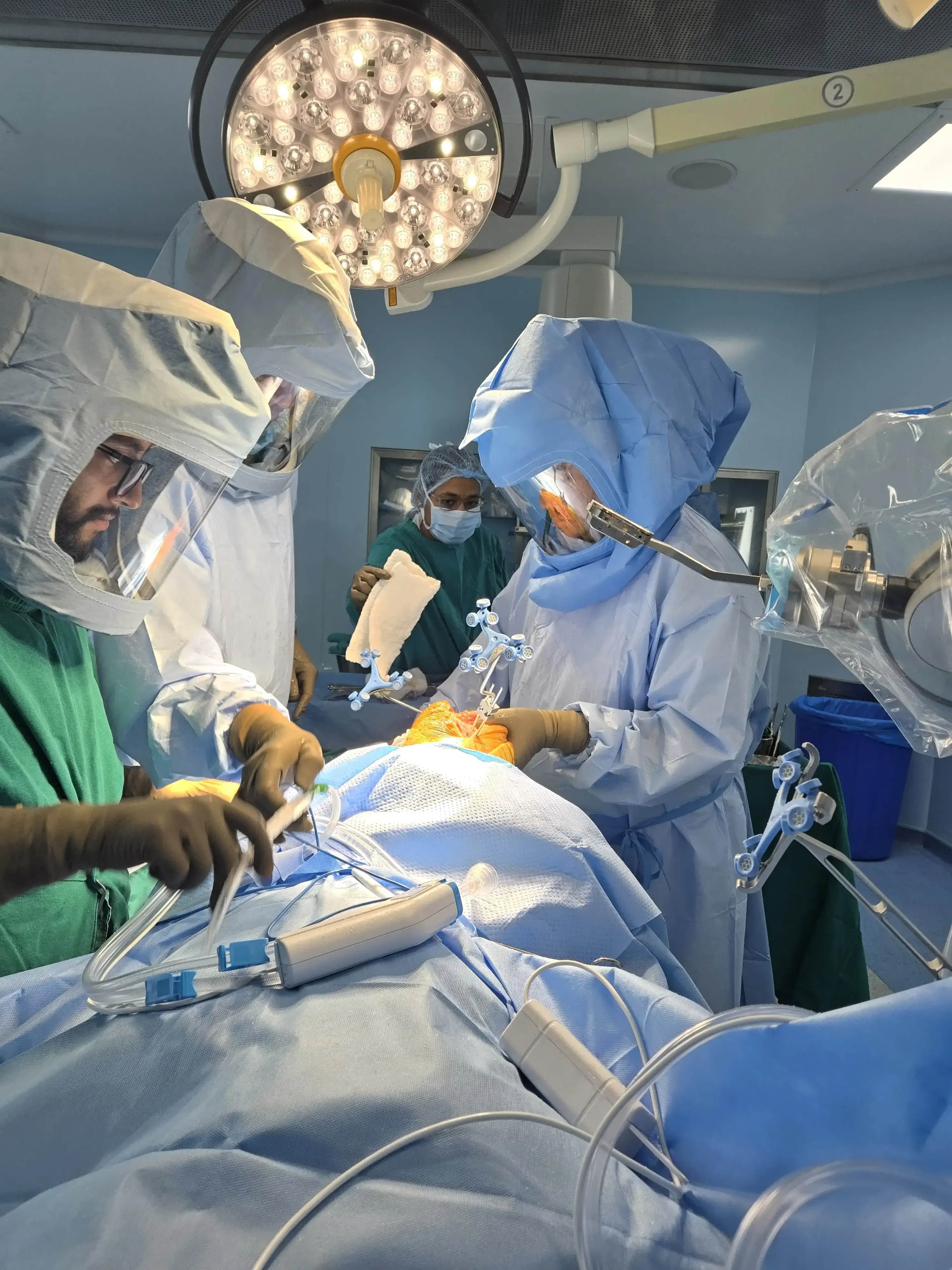
Need Expert Orthopaedic Care?
Consult Dr. Abhijit Kale, Mumbai's trusted expert in Robotic Joint Replacement & Spine Surgery. Get a personalized treatment plan today.